
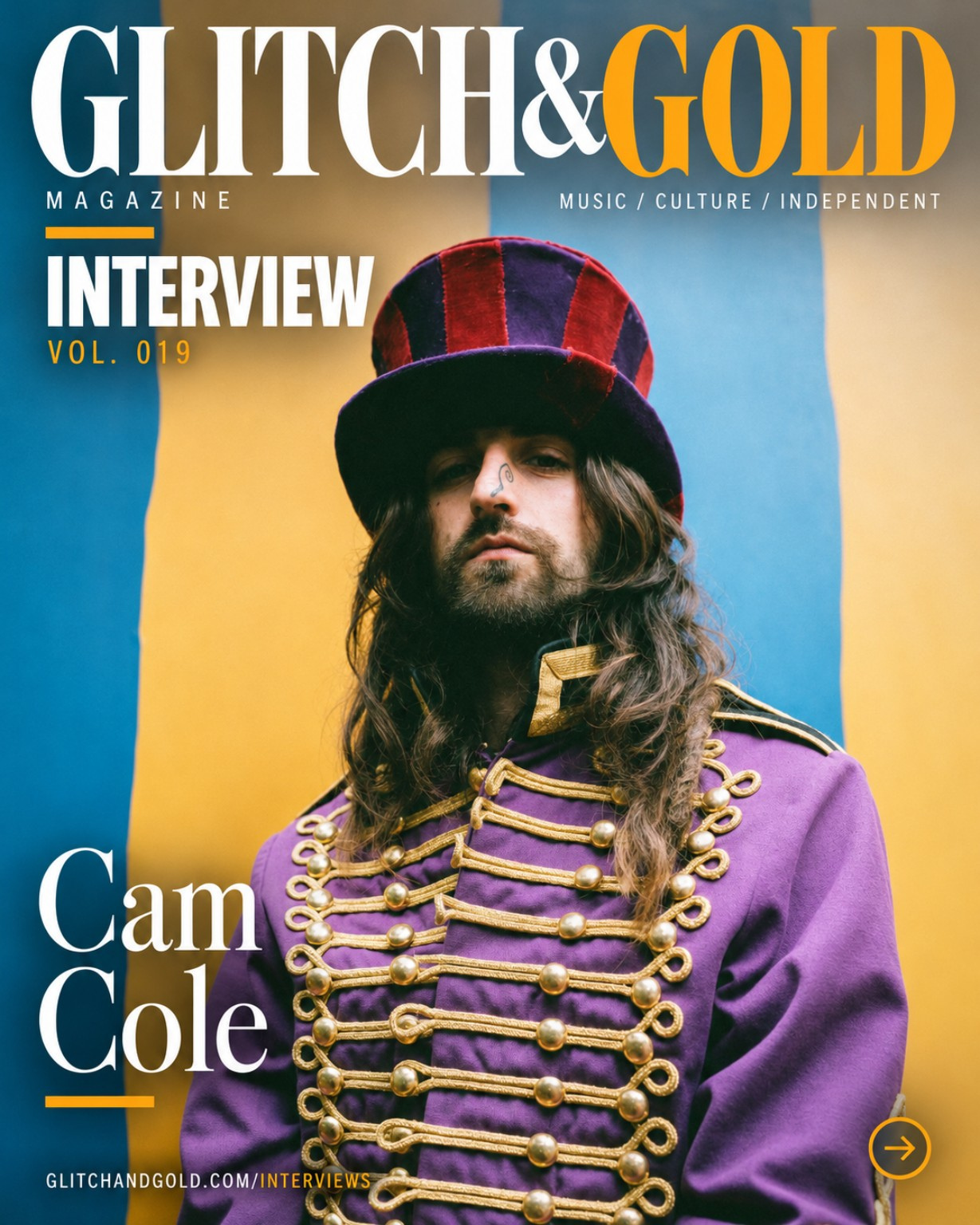
01 — PAINTING BEYOND THE ONE-MAN BAND
On your first three albums, the aim was largely to capture the one-man performance people already knew. With Lost In Creation, you’ve said you wanted to “paint with it a little more.” What did that change unlock in you creatively that the old approach could not?
Well, I would say what that unlocked was the ability to really follow what the song needed to reach its full potential. It allowed me to add other instruments and layer up guitars if necessary or add other vocal lines and backing vocals that would work well with the song. And that allowed me to follow the sound that I was hearing in my head when I heard the song in my head — as opposed to hearing something in my head and then trying to make it work only within the confines of what I can do live in one take. That said, the live one take approach was still the basis for all tracks, that’s how the drums and the main guitar were still recorded. I just then started adding loads more to it without loosing the core of the sound. I’m very glad that I went through this creative process.
02 — WHEN DECORATION BECOMES THE SONG
The title Lost In Creation came from becoming absorbed in experimentation “in a good way.” At what point during the making of the record did experimentation stop feeling like decoration around the songs and start becoming part of the songwriting itself?
That only really happens when you find something that is not just a decorative little tambourine or a shaker or whatever, but more like a new vocal line or melody. For example, on “Get Up Ya Honky Tonk” the whole chorus vocal was never there for about two years. I felt that it needed some sort of additional singing in there after we had already recorded the song, so I came up with this scat style vocal….and that vocal then went from an additional idea I had to completely changing the entire song. I had to rewriter and rerecorded the chorus guitar and the new vocal became. almost like the main theme of the song itself. So it depends on the parts and where they would end up, but that’s one example on this album where the decoration turned into leading to more songwriting itself.

03 — LEARNING TO PLAY LOOSE
Your setup depends on extraordinary physical coordination, yet your time in Mississippi seems to have pushed you toward valuing looseness, imperfection and recovery within a groove. Has learning to let things become a little messier changed the way you hear your own playing?
I guess I rediscovered that playing tight and on the money isn’t the only way to make something sound intentional. As you say I spend a lot of time practicing getting some songs as tight as they can be because some songs just need that tightness to sound right. But for the right kind of tune If you can be loose but keep it somewhat in time and it grooves then it’s right as well, and in the case of some of these swampy blues inspired tunes that enhances the whole vibe and sound.
04 — CHOOSING DIFFICULTY
You’ve considered simplifying parts of your live setup digitally, but you’ve also said the visible physical effort is part of what makes people stop and watch. Why is preserving that difficulty important to you when technology could make the job considerably easier?
Honestly, it just doesn’t make any sense to me to make my life easier and in the process sabotaging that huge, attractive part of my show, and part of my musical journey, just for the sake of my own comfort. I don’t understand how that would benefit me in any way. This is part of what I think is wrong with the world: people just keep deciding to choose comfort over what’s actually best — for everything and everyone, including themselves. I think you’ve got to suffer a little bit to pull something off that’s actually worth anything.
05 — SERVING THE SONG
Markus Stretz has now worked with you across multiple records, but Lost In Creation gives the studio a much larger creative role. What does Markus bring out of you that you are less likely to arrive at when you are working entirely on your own?
Markus is my mixing engineer and producer and also manager. We spend a lot of time in pre-production after I send the initial demos to him before we record them in a studio. We get together and work on suggestions for the songs that I’ve written that he or I bring in, like arrangement ideas, new parts, rhythms etc. We try things out and we listen to them back and polish the song. Sometimes these new bits work, sometimes they don’t. It’s important to have someone in your team that you trust in music — someone whose ego is not going to get in the way of the song, and who is there to serve the song with you. If you’re a creative songwriter, it’s important to have a person like that involved in what you’re doing with a more objective view, because as a songwriter you can’t always hear what everyone hears; you are somewhat attached to your songs. There needs to be a filtration process before people get to hear it. On this album especially we weren’t afraid to try add new parts during the mix and Markus added some of these.Some songs that I write, we don’t touch — we leave it, it’s done. There might be some tiny little sprinkles that we do over the top to emphasise what’s already there. Other songs need a little more help. But Markus isn’t afraid when I bring a song to him that doesn’t need further work to say “There is nothing I need to do here, I think that’s done.” That’s when you know that you are working with the right guy who puts the song over their ego. When someone instead is just eager to change things up for the sake of it, to please their own ego rather than because the song needs it — that’s when you have a problem.
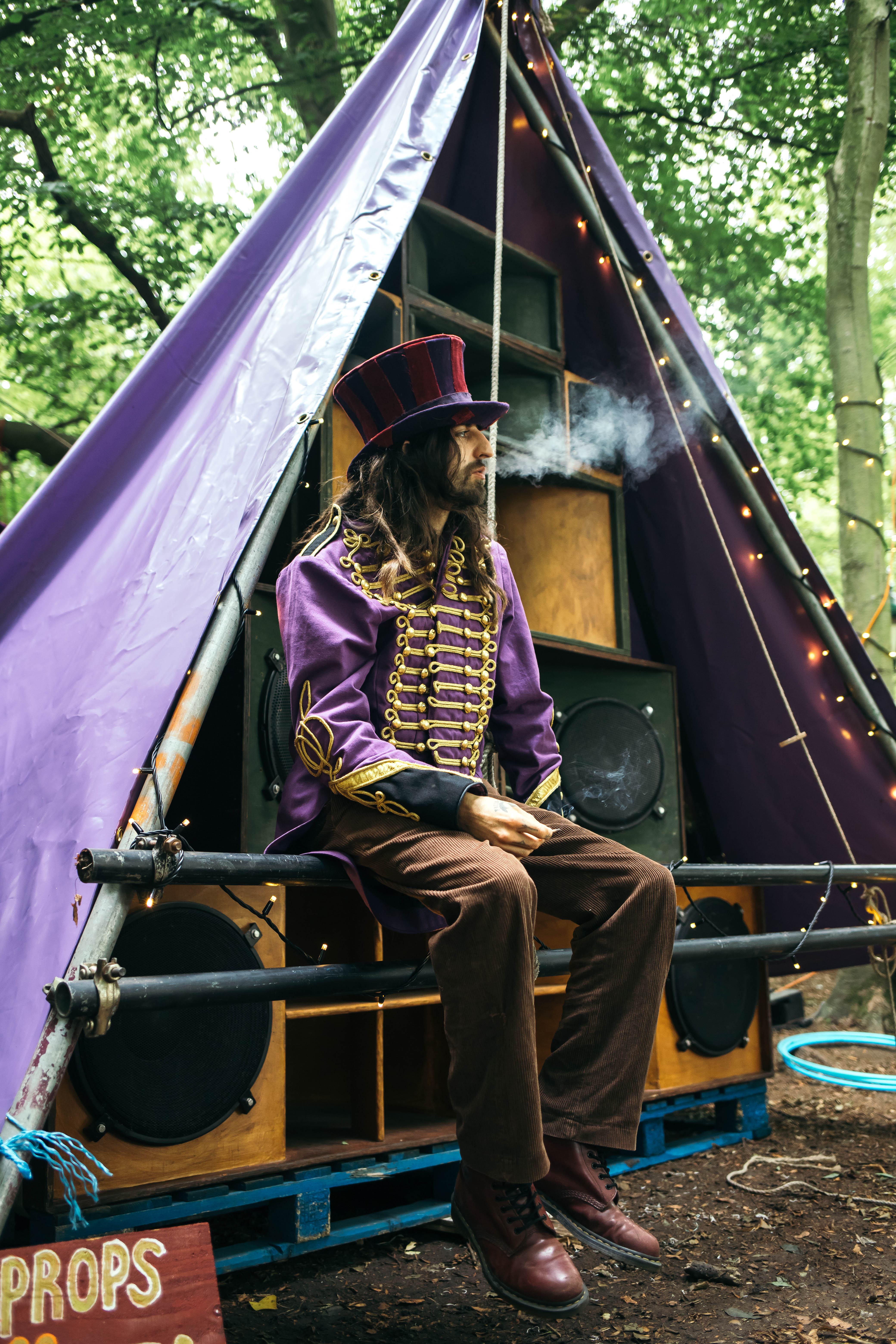
06 — FINDING THE RIGHT WORLD
“You Shall Be Saved” existed during the Unleash period but did not belong on that record. What tells you that a song may be good enough to keep, yet still belong to a completely different world than the album you are making?
Well, in this particular circumstance, what told me and Markus — because we made the decision together — was that it was a completely different vibe to all of the other songs that were on Unleash. The other songs on Unleash were much heavier. They were rock and roll, blues kind of vibes, with a slight touch into the nu-metal sphere. And it just stood out like a sore thumb. It wouldn’t have made any sense on that album whatsoever, and it would have got lost among those other tunes. So we held it back. And funnily enough, there were some other songs that I was working on around that time, and those songs were put into a list and released on Lost In Creation. It fits perfectly on Lost In Creation because I was pursuing more of a singer-songwriter approach. I was listening to lots of work from singer-songwriters, and just listening to great songs in general — all of the best songs that Noel Gallagher wrote, all the best songs that Damon Albarn wrote, all the best songs that KT Tunstall wrote, Sheryl Crow — “All I Wanna Do (Is Have Some Fun)”, that one. Just loads of great singer-songwriters. I was listening to loads of them, and so my work started to reflect what I was listening to. A lot of those songs on Lost In Creation came about because I was listening to those kinds of artists and that ended up creating a better batch of songs for You Shall be Saved to sit among.
07 — WHERE CAM COLE ENDS
You’ve mentioned having a separate electronic project for ideas that do not fit Cam Cole. As Lost In Creation pushes the boundaries of your sound further, where do you now draw the line between something that belongs inside Cam Cole and something that has to live elsewhere?
Great question! For anything to be involved in my solo stuff, it would have to be within the genres of rock, blues, psychedelic, singer-songwriter, indie. It would have to be not too overproduced or electronic; something that is more natural-sounding using live instruments only. And it would also have to be an offshoot or a sub-genre of one of those main genres, With the electronic genres I’ve been working in, in my side project, they are far too different for any kind of merge or crossover with my solo stuff. I’m using all kinds of electronic instruments on there and FX and looped drums etc. So yeah the instrumentation and production dictates it mostly.
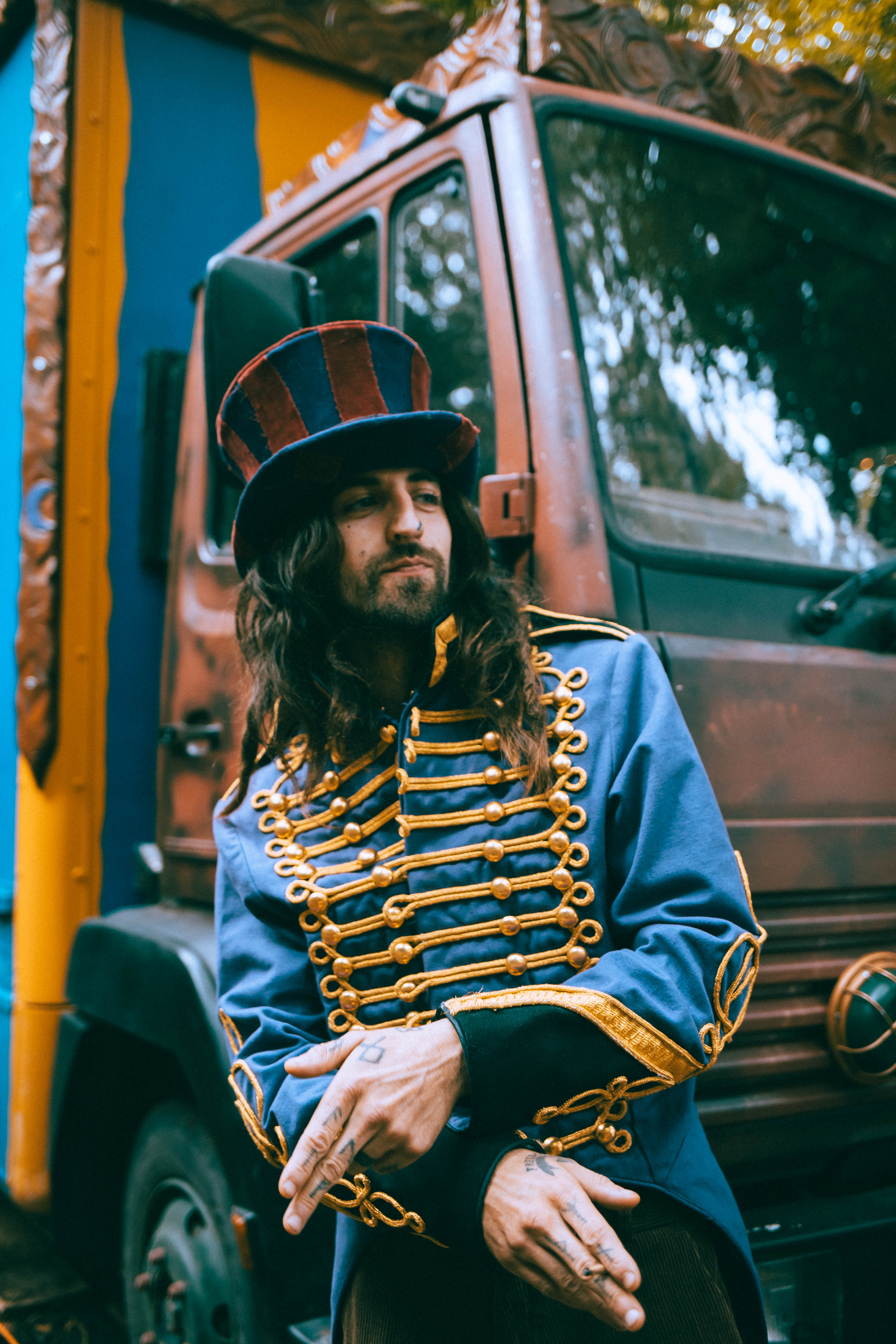
08 — THE COST OF FREEDOM
You describe independence as complete creative freedom, but also as a way of working that leaves you and your manager carrying the jobs of an entire industry team. Has there ever been a point where protecting that freedom started to compete with having enough space to actually create?
Yes, is the short answer. There have been multiple times, and nearly every other month I have a moan about it. Don’t get me wrong — it would be great to hand over, in particular, marketing and various other responsibilities to a whole team of people. But I don’t want to lose my creative control. That’s the most important thing to me. I’d like my music to resonate with lots of people, but I don’t necessarily want to be a celebrity, or mega famous. I’m not really about that. So I don’t need to sign anything with anyone, because I can do it on my own, really — me and Markus can do this together. But the issue is when our heads are going to explode because we’re trying to do multiple different jobs. Even just rehearsing for my shows, I have to organise an entire production. I have to organise a lighting guy, my sound team, my techs. All my stuff is bespoke, and everyone’s doing it on a budget, and I’m having to manage them as well as be the entire band at the same time. So it’s a hell of a lot, and I can’t always do it, and it’s very frustrating. I often end up going home with a headache because my brain has been overworking trying to do multiple jobs. I could cry about it to you for another five minutes or so, but it’s not going to really fucking change anything. My options are: sign, and lose creative control and a lot of the money that I would be making if I was independent — money I can reinvest in what I’m doing. Or get an entire team of people to do all those jobs that I don’t really want to be doing. But without me managing those jobs, it can often just go nowhere, which is what happens to lots of artists. As a result, they’ve signed away a part of their life that could have been a time when they were able to do everything they wanted to do with music. Instead, the mismanagement got in the way and stumped their career instead of elevating it. So that’s what I’ve always thought. Only the tiniest percentage of musicians that sign actually get anywhere in the industry, so that’s where my head has been — it’s not worth the risk. I thought I’d just do it independently, and it’d take longer. The downside is that I get mentally tired. But so what? It is what it is.
09 — BUILDING A PLACE TO ESCAPE
You often talk about music, festivals and live shows as places people can briefly escape ordinary reality. When you build a Cam Cole show now, are you thinking less about presenting songs and more about constructing a world people can physically enter for an hour or two?
Well, I’m thinking about both. I want to present songs in the best way possible in a show, but I would also like to create some sort of bizarre kind of world that people can walk into, where they just completely lose track of what they were doing with their day — or whatever it is that they do a lot of the time that they don’t enjoy. I had this experience a few years ago when I was busking on Brick Lane. This woman came up to me after I performed the show, and she just grabbed me by the arm. She was a French lady, and she said, “I want to thank you, Monsieur Cole, for your performance. It means a lot to me.” And then she just kind of looked at me, and I kind of nervously laughed, ecause she was quite close and I didn’t know who she was. And then she started crying, and I was just like, “What’s going on — are you all right?” And she said, “Oh, I just really enjoyed your show, and I stopped thinking about what I was thinking about, temporarily.” And then she was gone. And I was kind of left there, just like, “What the f—?” Back then, I was just focusing on this one-man band show, really, whilst building my truck house, and I didn’t realise it would have such an impact on people. And I thought to myself, right — if I can make someone escape from whatever reality they don’t actually want to be in with the music, then maybe I can do that with other things as well, visually. I want to give that experience to people. I really, really want people to have a place to escape if they need it.

10 — EXPANDING THE ONE-MAN BAND
Lost In Creation took you beyond simply documenting what one person can do with guitar and Footdrums. After making this record, has your own definition of what a “one-man band” can be changed?
I don’t have a definition of what a one-man band can be, really. So many people are doing it in so many different way. But on this record I’ve tried to change how varied a one-man band can sound while keeping the essence of it alive. Even though there have been things added on top of my one-man band sound — tambourines, shakers, other guitars, et cetera — the essence of what I do as a one-man band is the cornerstone of every single song on the record. So I hope that I’ve evolved it slightly, and I’ve done it in a tasteful way that adds to the songs and fills out the sound that my one-man band setup has. I hope I’ve added to it so that it sounds more filled out, or better.