
RETURNING TO INNOCENCE
There is a moment in this interview where Caro says something rather wonderful.
“I jump anyway.”
She is talking about fear.
About still having it, quite a lot actually, and deciding that it no longer gets the final say.
It turns out to be a pretty good way into Returning to Innocence.
Because this is an album made by someone who has already had the big career. The success. The different names. The different rooms, as she calls them herself.
And still there were things to figure out.
Who are you when you stop trying to be who people expect you to be?
What does success mean when the noise around it becomes less important?
And where exactly is home when you have to build part of it inside yourself?
Today, Returning to Innocence is out.
And on the day Caro finally lets the record go, we sit down with her to talk about everything it took to get there.
01 — THE MEANING OF INNOCENCE
1. Returning to Innocence is such a striking album title. What does "innocence" mean to you today, and what made this the right moment in your life to return to it?
Innocence isn't naivety to me, and it's not some clean, sanitized kind of purity either. Accepting exactly that feels sacred to me, people exactly as they are, myself exactly as I am, including the parts I'm not proud of. And it's tied to finally standing in my full identity as an artist, all the versions of me, instead of picking one because it's easier for everyone else. This felt like the right moment because I don't want to be scared of what people think anymore. It also made me question what innocence actually is, we tend to look at it as something clean and untouched, when for me it's closer to the opposite. The album cover carries that same question, birth, the body, the things we're taught to hide or sanitize, shown as exactly what they are.
02 — LETTING GO OF WHO YOU HAVE TO BE
2. Throughout this record there's a recurring search for freedom, home and self acceptance. Looking back, what have you had to let go of in order to finally make this album?
The hardest thing to let go of was the feeling that I have to be something. Not just as an artist, the way people expect a certain sound or a certain version of me, but as a woman too, and as a human in general. There's this constant pressure to fit an image, and I bought into it for years without even questioning it. Letting go of that isn't something you do once and then it's done. It's a process, messy, ongoing, and I'm still very much in the middle of it. Reinventing myself as an artist meant walking away from an entire team and building a new one from nothing, without a manual, incredibly afraid I'd fail in front of everyone who already knew what my old successes looked like. If I'm honest, what you hear on this album isn't me arriving at full self acceptance. It's the wish for it, loud and clear, maybe more honest than the real thing would have been.
03 — WHEN THE SONG TELLS THE TRUTH
3. Songs like Call The Shots and I Can't Win feel incredibly honest. Was there a moment during the writing process where you realised you were revealing more of yourself than ever before?
Honestly, I feel that way almost every time I write. My process is intuitive, I never sit down knowing exactly what I want to say, the song tells me, whether I like what it has to say or not. I had the same experience with Nowhere Near the Sky, my songs work like a kind of therapy, they hand me truths I wasn't looking for, sometimes incredibly inconvenient ones, the kind you wouldn't say out loud at a dinner table. Call The Shots and I Can't Win were no different, they just kept peeling back another layer until something true was left standing, whether I was ready for it or not.
04 — SUCCESS WITHOUT THE NOISE
4. You've lived through extraordinary success, artistic reinvention and now another new chapter. How has your own definition of success changed over the years?
These days I look much more at what I actually made than at how many people respond to it. And it's not even about ticking off some plan I had in my head, I let myself get surprised by what comes out just as often. That's really where success starts for me now, an internal kind of enthusiasm about the result, rather than deciding in advance what it's supposed to be or do. What I do know is that I always want to make something extraordinary. That's a massive drive in me, bigger than the need to be liked or understood. And that need is still enormous, some days it's almost unbearable, I'm not going to pretend it isn't. But the drive to make something real wins, even when it costs me, even when it means watching something I poured myself into land quietly instead of loud.
05 — SEARCHING FOR HOME AGAIN
5. One of the most beautiful lines on the album is the feeling of "searching for home again." Do you think home is a place, a person, or something you've gradually found within yourself?
It's something I've gradually found within myself, and that was lonely work, nobody hands you that. But I Can't Win is really about the home I want to find together with other people, that ache for real connection, for actually feeling and understanding each other in a world that so often pits us against one another, especially women. So it's both. There's the home inside me I had to build on my own, and there's the home that only exists between people, which you cannot fake and cannot build alone, no matter how badly you want to.
06 — ALL THE COLORS IN THE VOICE
6. Your voice has always been instantly recognisable, yet on this album it feels more intimate than ever. What changed, not in your voice, but in the person behind it?
It's not really the voice, it's what's behind it. As I let go of who I feel I have to be, my voice loosens up with it, and that makes room for all the colors I actually have in me, not just the ones that sound good or safe. I'm not filtering as much anymore, and that means what comes out isn't always flattering. It's just closer to whatever is actually happening inside me in that moment, ugly parts included.
07 — GRIEVING IN THE ROOM
7. Your music has always been cinematic, but Returning to Innocence feels almost like reading pages from a personal journal. Were there songs that were particularly difficult to finish because they asked too much of you emotionally?
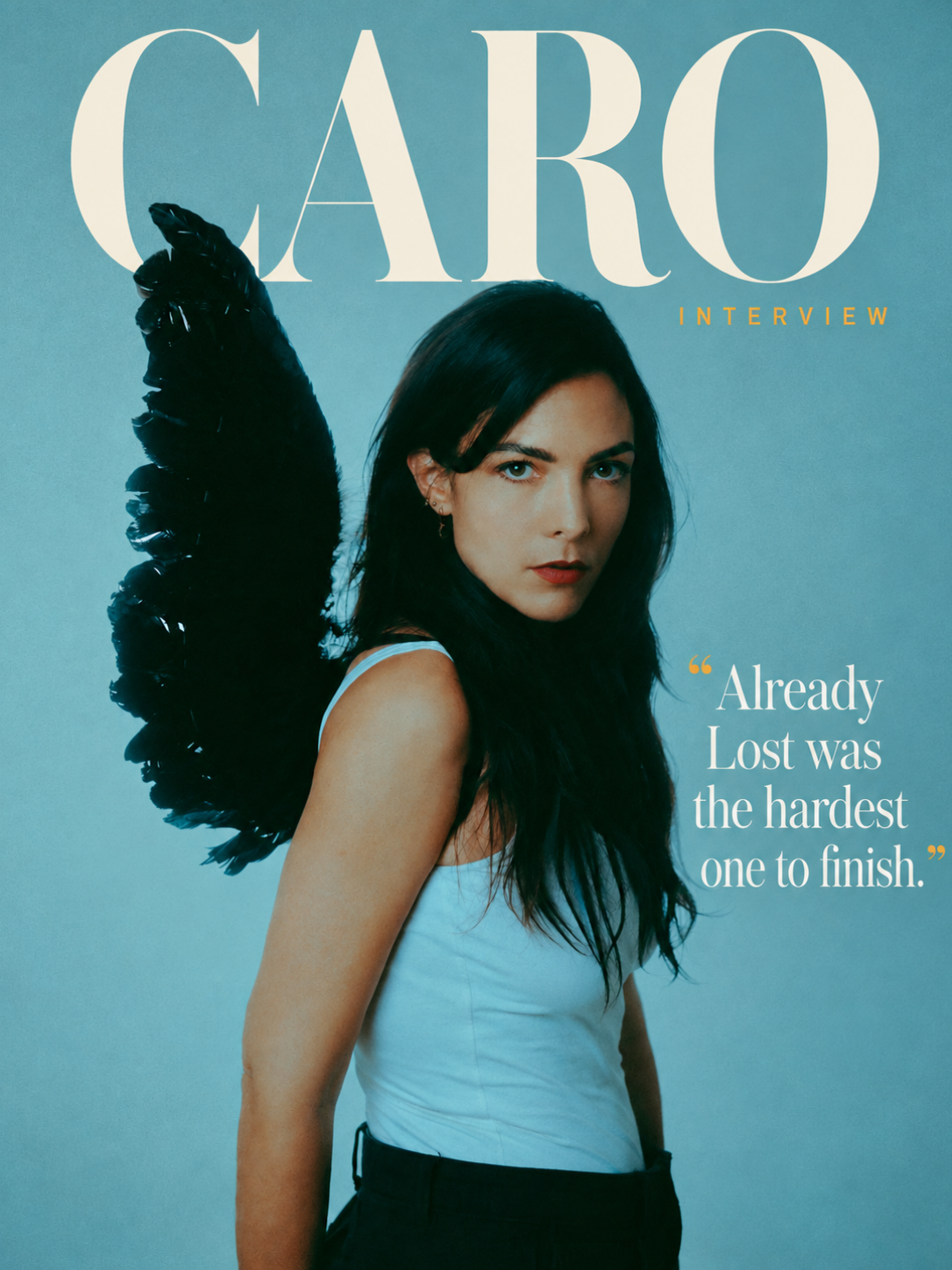
Already Lost was the hardest one to finish. I actually cried while writing it. At some point I remember turning to the producer and saying it felt like I was grieving. It wasn't planned, it just came out of me in the room, and I had to let it.

08 — DIFFERENT ROOMS, SAME STORY
8. Looking back now, do you see your career as different chapters, or as one continuous story that simply needed different names to be told honestly?
I feel both, honestly. There are chapters, Caro Emerald, The Jordan, and now Caro, each with its own name, its own sound, its own world even. Caro Emerald lived in a world that was created, it was never meant to be read as my diary. But underneath all of it runs the same emotional urgency, the same need to say something true, just told through different names because I needed different rooms to say it in. None of them replaced the one before it. Now they finally get to exist in the same room, and that room is me.
09 — JUMPING WHILE AFRAID
9. This album feels incredibly self assured, but also deeply human. After everything you've experienced, do you feel more comfortable in your own skin today than you did a few years ago?
If I'm honest, I very often don't feel self assured at all, and that's just shitty, there's no nicer way to put it. What changed isn't that the fear went away. It's that I've decided not to let it stop me anymore. I jump anyway, scared, unsure, sometimes hating it in the moment. And weirdly enough that, not confidence, is what feels like real strength to me now.
10 — THE TRUTH BEFORE THE HISTORY
10. If someone discovers your music for the very first time through Returning to Innocence, what do you hope they understand about you before they know anything about the career that came before it?
I'd want them to feel that this is a woman who tells the truth, even when it's inconvenient, even when it costs her something. Not someone who has it all figured out, someone who is still searching, honestly and out loud. That's really the only thing that matters here, not where I came from or what came before it. If they hear that first, they hear the right thing.
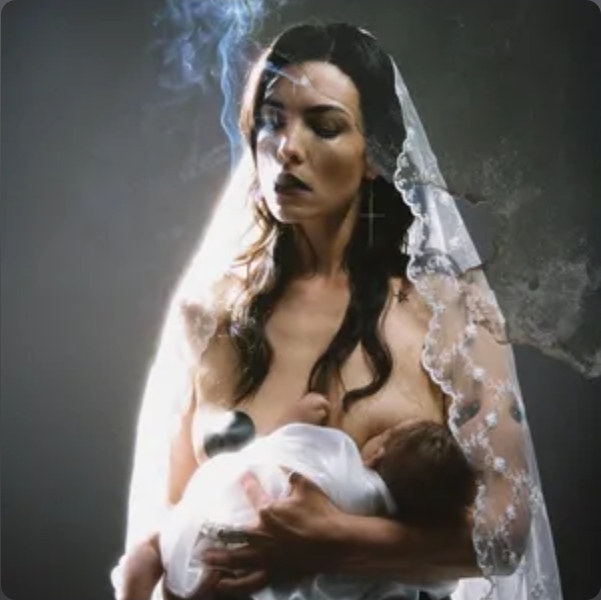
Album cover: Returning to Innocence