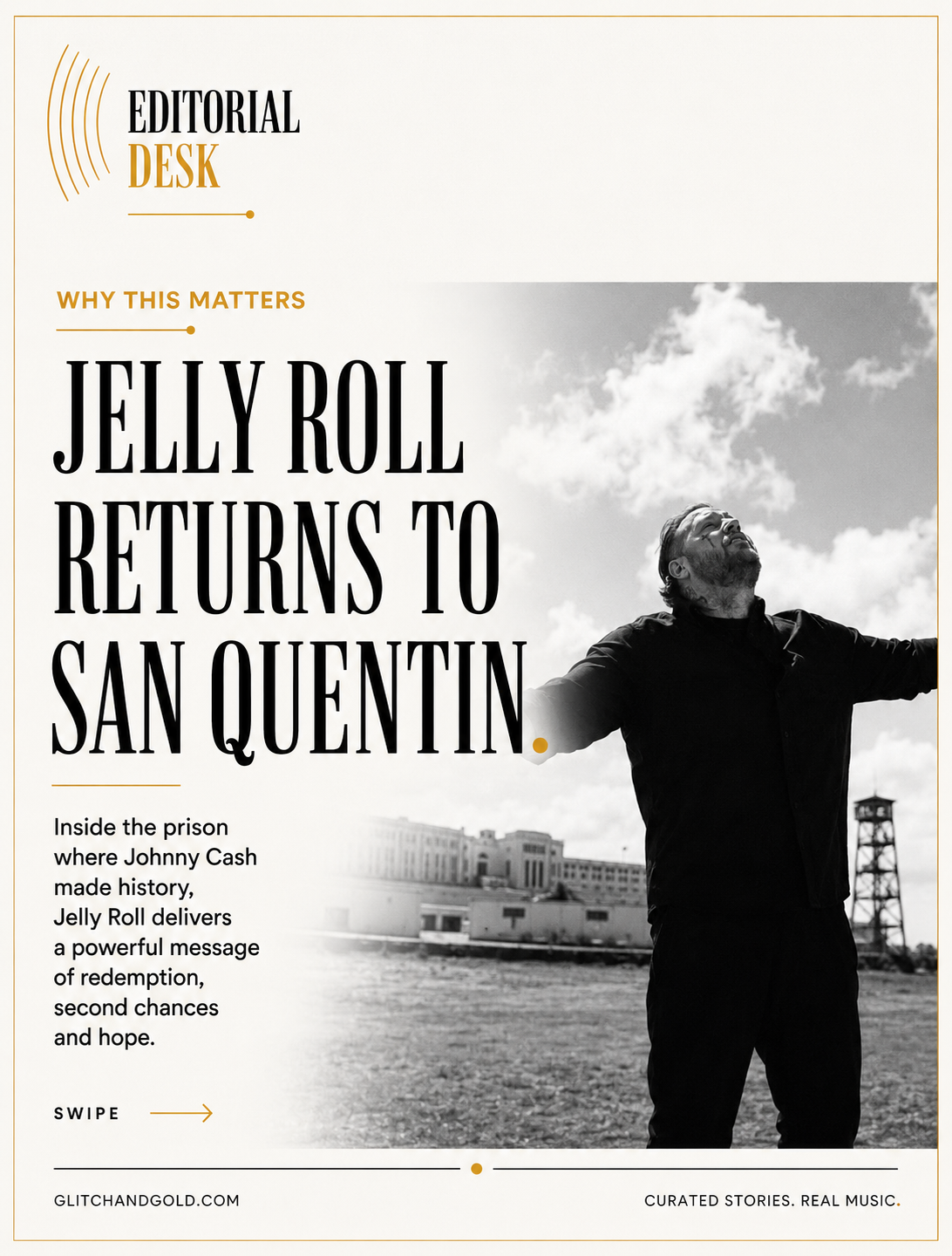
More Than A Music Video: Why Jelly Roll's Return to San Quentin Matters
Some places never stop carrying history.
Long after the lights are packed away and the applause has faded, certain rooms continue to remember the people who stood inside them. San Quentin is one of those places.
For most of the world, it remains one of America's most recognizable prisons.
For music, it will always be the place where Johnny Cash rewrote the relationship between artists, audiences and redemption.
More than fifty years later, Jelly Roll walked through those same gates.
Not to recreate history.
To continue a different chapter of it.
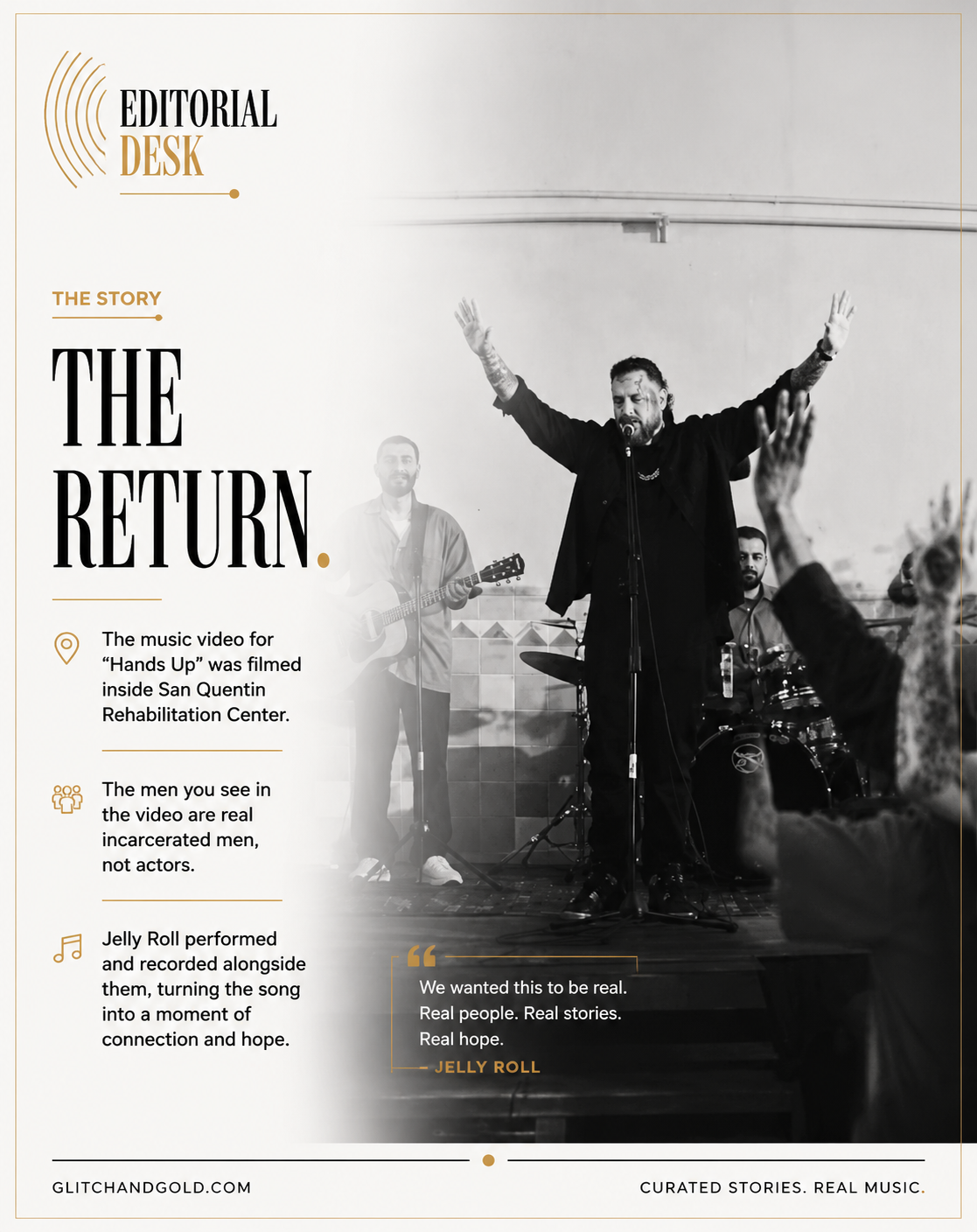
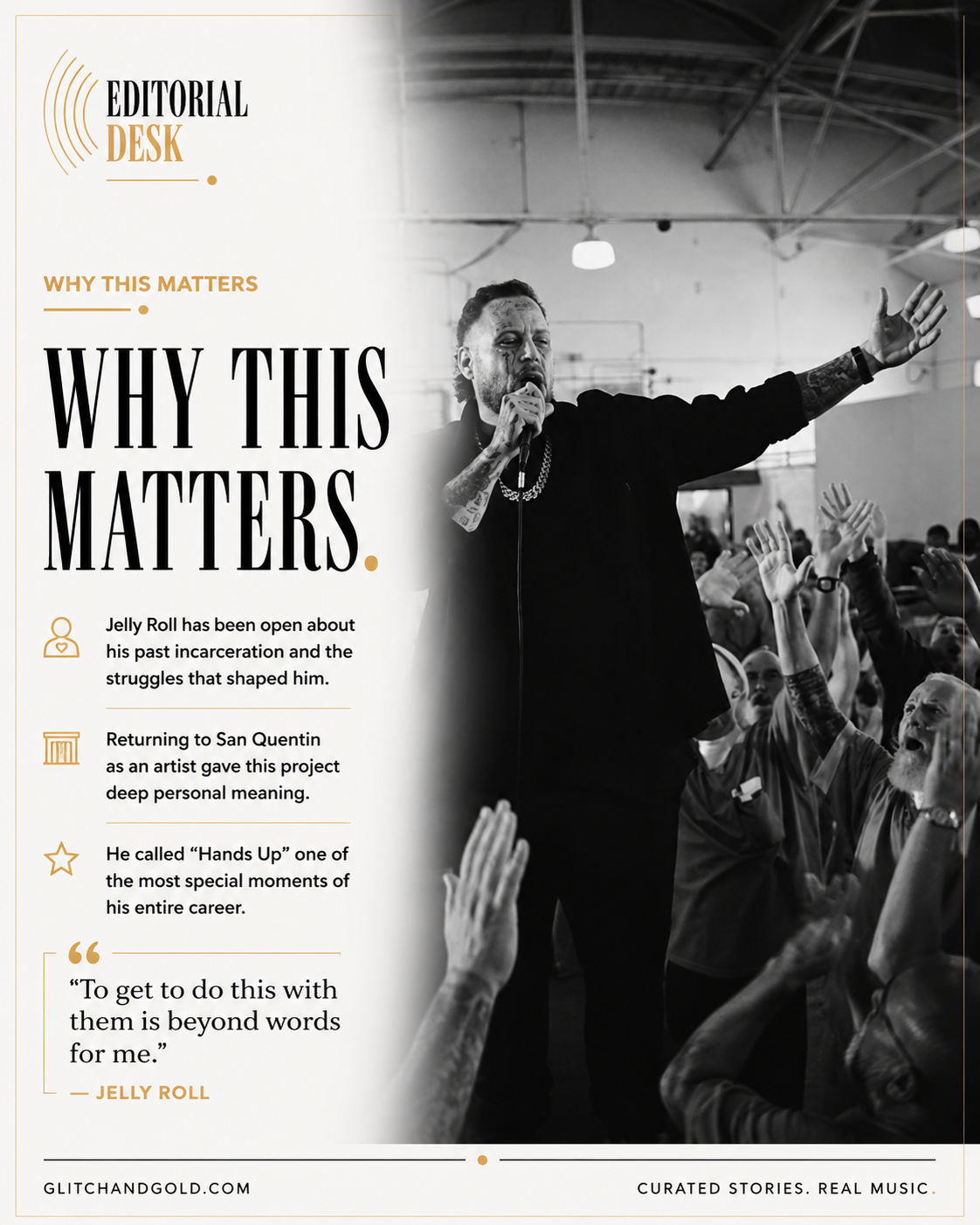
His new music video for "Hands Up" was filmed inside San Quentin Rehabilitation Center alongside incarcerated men who appear throughout the film—not as actors, but as themselves. They perform, sing and share the screen with an artist who understands that environment from personal experience.
That distinction changes everything.
Jelly Roll has never hidden his past. Before becoming one of country music's biggest voices, Jason DeFord spent years caught in cycles of addiction, incarceration and poor decisions. His story has never been about pretending those years didn't happen. Instead, he's built a career by talking about them with remarkable honesty.
Returning to San Quentin wasn't simply another filming location.
It was personal.
"The moment my life truly changed is when I threw my hands up," Jelly Roll wrote while introducing the video. “I know a lot of folks will hear this and remember their own 'hands up' moment.”
It's a powerful thought because "Hands Up" isn't really about prison.
It's about surrender.
About the moment someone stops running from themselves and starts believing change is still possible.
That idea runs through every frame of the video.
The inmates featured aren't background characters placed there for atmosphere. They're musicians, performers and men carrying stories of their own. Jelly Roll performs beside them rather than above them, turning what could have been a symbolic gesture into something that feels remarkably human.
The result is less like a traditional music video and more like a shared act of testimony.

The location inevitably invites comparison with Johnny Cash's legendary 1969 performance inside San Quentin Prison. That concert became one of the defining moments in American music, proving that songs could reach audiences society often chose to ignore.
Jelly Roll isn't trying to recreate that moment.
He's responding to it.
Where Cash challenged the way people looked at prisoners, Jelly Roll speaks from the perspective of someone who once could have been sitting on the other side of the room.
That lived experience gives *Hands Up* an emotional weight that can't be manufactured.
After releasing the video, Jelly Roll described the project as one of the most meaningful experiences of his career, thanking everyone involved, especially the men inside the facility.
You believe him.
Because nothing about the project feels designed simply to promote a song.
For most artists, a music video exists to support a single.
For Jelly Roll, "Hands Up" became something much larger.
It became a reminder that music can still connect people across circumstances, histories and mistakes. That the places carrying the deepest scars can also become places where hope quietly begins again.
Some stories deserve attention because they're successful.
Others deserve attention because they remind us what music can still do.
This is one of them.