
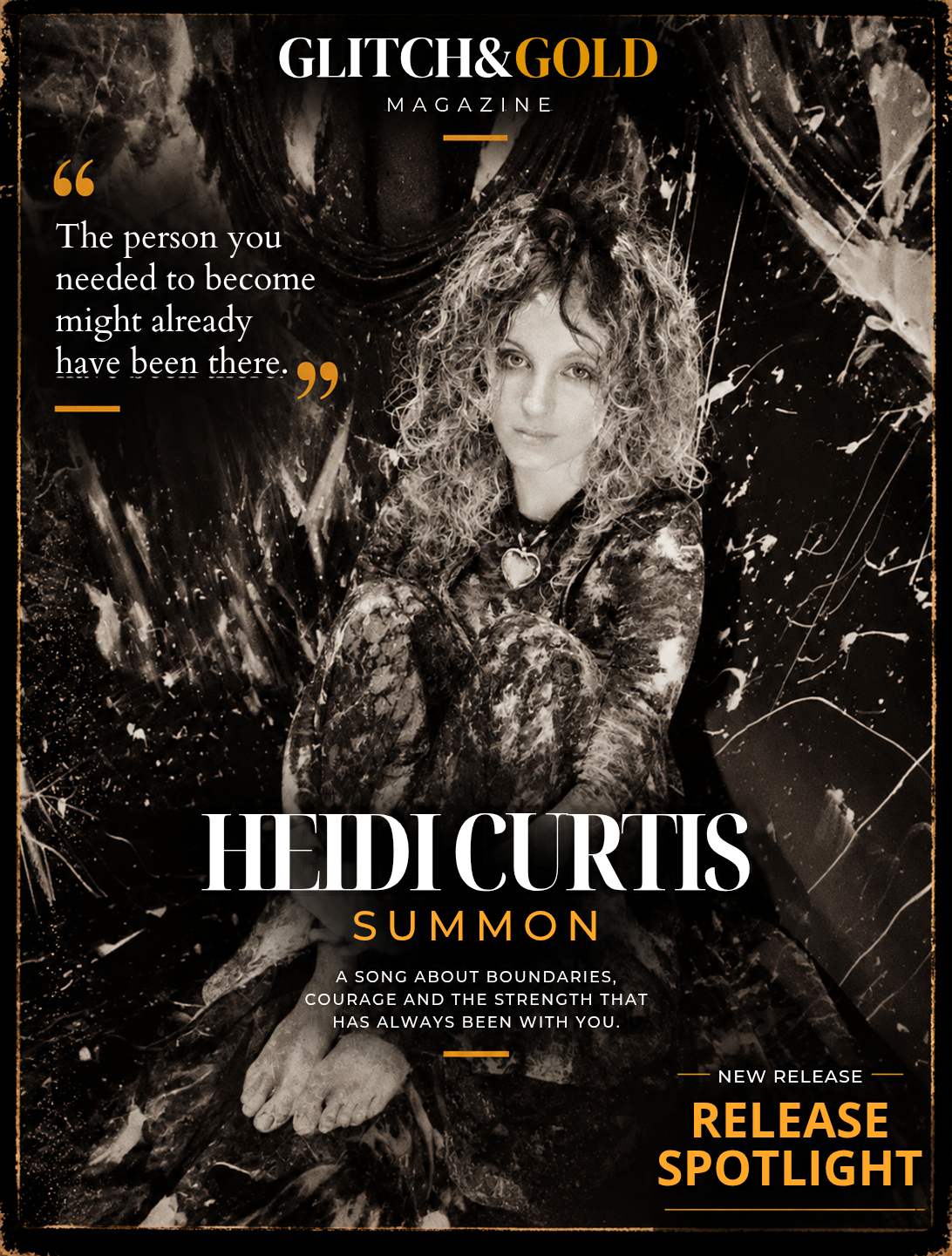
SUMMON
Setting a boundary sounds easy.
Two words, perhaps.
No.
Enough.
Stop.
Then you actually have to say them.
That is where Summon begins to make sense.
Heidi Curtis describes her new single as “a totem of strength, courage and resilience.”
Big words.
The interesting part is where she found them.
Curtis has spoken about coming of age with a sense of shame and guilt around setting personal boundaries. Knowing where the line should be was one thing. Actually drawing it was another.
Anyone who has ever rehearsed a conversation in their head seventeen times will probably understand.
You know what you should say.
You know why you should say it.
And still something inside you whispers:
Maybe don't.
Maybe you're being difficult.
Maybe just leave it.
Summon lives in that space.
The song isn't really about becoming fearless.
Curtis doesn't pretend the fear disappears.
Neither does the guilt.
The movement comes from acting while they are still there.
That is a much more interesting version of courage.
And it gives the title its weight.
To summon something suggests calling it from somewhere else.
Curtis turns that idea around.
The strength she is looking for is already there.
Buried perhaps.
Ignored.
Doubted.
But there.
You just have to get it to come forward when you need it.
Curtis has been circling questions like these throughout her first year of releasing music.
Her debut single Undone arrived in late 2025. Then came Siren, What Am I Missing?, Behind The Door and, in May, her debut EP Hollow Heart. That record dealt with loss and grief, but also with what happens when difficult feelings are allowed somewhere to go.
Summon feels like another step.
Less about understanding what happened.
More about deciding what happens next.
Curtis is 24, from Newcastle upon Tyne, and spent years playing before she officially began releasing solo music. She has talked about writing songs from childhood and playing her own material at North Shields open mic nights when she was around thirteen. Since then, those small rooms have become rather larger ones.
But that isn't really what makes Summon interesting.
The interesting part is much smaller.
A person knows something isn't right.
A line needs to be drawn.
Drawing it feels awful.
She draws it anyway.
There is no grand transformation required.
No new version of yourself waiting on the other side.
Just the rather uncomfortable discovery that the person you needed to become might already have been there.
Curtis asks where we find the ability to move through our darkest moments.
Why we keep looking outside ourselves for answers.
And what happens when instinct finally becomes louder than doubt.
Summon doesn't offer a neat answer.
It offers something better.
The possibility that courage can exist at exactly the same time as fear.
You don't wait for one to disappear.
You call the other one forward.
And then you say the thing.